Most first-time buyers assume you need 10–20% saved before you can even think about buying a home. That assumption keeps a lot of people renting longer than they need to — and it's simply not true.
The USDA loan program has been quietly offering 100% financing to eligible buyers for decades. No down payment. Eligibility rules that are far more flexible — and far more widely applicable — than most people realize.
If you've never heard of it, you're not alone. It's one of the least talked-about mortgage programs in the country, and one of the most underused.
"The down payment isn't the only path into a home. For the right buyer, the USDA loan removes the biggest barrier entirely."
A USDA loan is a government-backed mortgage offered through the U.S. Department of Agriculture's Rural Development program. Despite the name, it isn't just for farms or remote countryside — the program covers a surprisingly large portion of the country, including many suburban communities that most people wouldn't consider "rural."
The program was designed to make homeownership accessible in areas outside major urban centers. In practice, that means millions of eligible properties across the country — and millions of potential buyers who could qualify without a single dollar saved for a down payment.
There are two main types: the USDA Guaranteed Loan, which is issued through the government-backed program by approved mortgage companies, and the USDA Direct Loan, which is issued directly by the USDA for very-low-income borrowers. Most of the buyers we work with go through the Guaranteed Loan program — and that's where we spend most of our time.
Even buyers who've heard of USDA loans often underestimate how favorable the terms actually are. Here's what makes this program genuinely compelling.
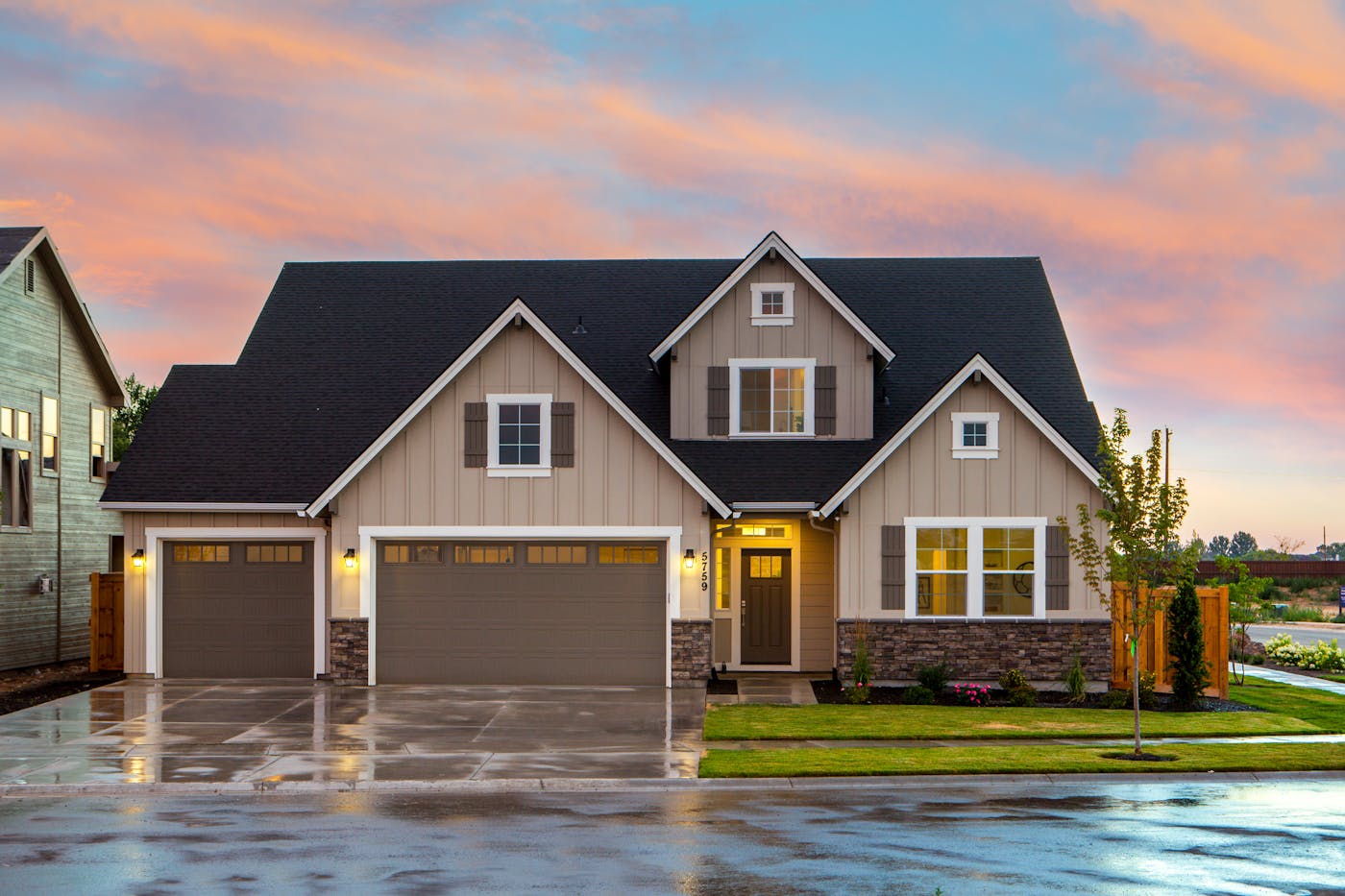
USDA-eligible areas often include established suburban neighborhoods — not just rural farmland. Many buyers are surprised by what qualifies.
USDA eligibility comes down to two main factors: where the property is located and what you earn. Both are more flexible than most buyers assume.
The home must be in a USDA-designated eligible area. These include rural communities and many suburban areas outside large cities. The USDA maintains an online eligibility map — plugging in a specific address takes about 30 seconds and gives you a definitive answer.
USDA loans have income limits, but they're calculated on total household income — not just the borrower's. Limits vary by location and household size, but generally allow up to 115% of the area median income. In many parts of the country, that ceiling is higher than buyers expect.
A credit score of 640 or higher generally qualifies for streamlined underwriting. Below that, it's still possible but requires a more detailed review. We'll also look at employment history and debt-to-income ratio to make sure the monthly payment is one you can carry comfortably.
USDA loans are for primary residences — the home you'll live in full-time. Investment properties and vacation homes are not eligible. The program is specifically designed to support owner-occupied housing in eligible communities.
| Down payment required | 0% |
| Minimum credit score (streamlined) | 640 |
| Annual mortgage insurance fee | ~0.35% of loan balance |
| Upfront guarantee fee | 1% of loan amount |
| Loan type | Fixed-rate, 30-year |
| Income limit (general) | Up to 115% of area median |
| Property use | Primary residence only |
FHA loans are the program most buyers turn to when they don't have a large down payment. But USDA — when you're eligible — often comes out ahead on total cost.
The right choice depends on your specific situation — location, credit profile, and how long you plan to stay in the home. But for buyers who are eligible, the USDA loan frequently wins on total cost over the life of the loan.
"The buyers who get the best deal aren't always the ones with the most saved. They're the ones who know which program was built for their situation."
USDA loans come with a lot of assumptions — most of them wrong. Here are the ones we hear most often.
"It's only for farmland." The program covers far more than agricultural areas. Suburbs, small towns, and communities outside major metros regularly qualify. The USDA eligibility map is the only way to know for certain — and it surprises most buyers who check it.
"My income is probably too high." Income limits are based on total household size, and they're set at 115% of the area median — not the national median. In higher cost-of-living regions, those limits can be quite generous. It's worth running the numbers before assuming you're out.
"The process is slower and more complicated." The USDA Guaranteed Loan program works through approved mortgage companies — the process runs the same way as any conventional loan. You're not dealing with a government agency processing your file by hand.
"No down payment means higher monthly payments." Because the annual mortgage insurance fee is lower than FHA, many buyers find their USDA monthly payment comparable to — or less than — a conventional loan with 5–10% down. We can run that comparison for your specific situation.
If you've been renting while saving toward a down payment, a USDA loan might mean you can buy a home significantly sooner than you planned. That's not a small thing. Every year you wait is a year someone else is building equity in a home instead of you.
The key is knowing whether you qualify — and that's something we can answer quickly. Location, income, credit, and the property type all factor in, and we walk through every piece of it with you before you ever fill out an application.
This is a program that genuinely changes the math for the right buyer. If you think that might be you, let's find out.
Curious whether you and the home you're eyeing qualify? We'll run the numbers with you and give you a clear answer — no pressure, no runaround. Just an honest look at what's available to you right now.
Contact Us →